
What Oregon Car Insurance Covers: A Plain-English Guide
Last Updated: November 12, 2026
Quick Summary
Oregon car insurance covers required liability, personal injury protection, and uninsured/underinsured motorist coverage, plus optional collision and comprehensive coverage for your own vehicle. The required layer pays others when you cause a crash, while optional coverage protects your own car and finances.
- Oregon's minimum liability limits are $25,000 per person and $50,000 per accident for bodily injury.
- Personal injury protection pays your medical bills and lost wages regardless of who caused the crash.
- Collision and comprehensive coverage are optional in Oregon and both carry a deductible.
- Hitting a deer is comprehensive, but hitting a guardrail to avoid it is collision.
- A personal auto policy typically excludes commercial use, so rideshare drivers should ask about an endorsement.
Table of Contents
- Oregon Car Insurance at a Glance: Required vs. Optional Coverage
- Oregon's Minimum Liability Requirements and the Financial Responsibility Law
- Bodily Injury and Property Damage Liability: What They Pay For
- Personal Injury Protection Oregon Explained: Medical Bills and Lost Wages
- Uninsured and Underinsured Motorist Coverage in Oregon
- What Is Comprehensive vs Collision Coverage?
- Optional Add-Ons: Roadside, Rental Reimbursement, and Glass Coverage
- What Oregon Car Insurance Does Not Cover
- Oregon Weather, Terrain, and Rideshare Gaps That Affect Claims
- How to Compare Oregon Auto Insurance Quotes Step by Step
- Frequently Asked Questions
Oregon Car Insurance at a Glance: Required vs. Optional Coverage
Oregon car insurance covers two layers of protection: coverage the state requires you to carry, and optional coverage you buy to protect your own vehicle and your finances. The required layer pays others when you cause a crash. The optional layer pays for your own car, your own injuries, and gaps the minimums leave open.
Most coverage disputes start with a driver who assumed a minimum policy worked like full coverage. It does not.
Here is the short version:
| Coverage | Required in Oregon? | What it typically pays for |
|---|---|---|
| Bodily injury liability | Yes | Other people's injuries you cause |
| Property damage liability | Yes | Other people's property you damage |
| Personal injury protection | Yes | Your medical bills and lost wages |
| Uninsured/underinsured motorist | Yes | Your losses from a hit-and-run or low-limit driver |
| Collision | No | Damage to your car from a crash |
| Comprehensive | No | Theft, fire, hail, animal strikes, glass |
| Roadside assistance | No | Towing and lockout help |
| Rental reimbursement | No | A rental while your car is repaired |
Below, we walk through each coverage in plain English, then show you how to compare quotes without getting lost in the paperwork.
Oregon's Minimum Liability Requirements and the Financial Responsibility Law
Oregon's financial responsibility law requires drivers to carry liability insurance at or above the state minimum limits (Oregon Department of Transportation ). Driving without it can expose you to personal financial liability after a crash.
The minimum limits are set by statute, and the Oregon DMV publishes the current figures on its Oregon DMV insurance requirements page. The required minimums are set by statute and can change; confirm current figures with the DMV before you shop. The minimums are:
| Coverage | Minimum limit |
|---|---|
| Bodily injury liability, per person | $25,000 |
| Bodily injury liability, per accident | $50,000 |
| Property damage liability | $20,000 |
| Personal injury protection | $15,000 per person |
| Uninsured/underinsured motorist, per person | $25,000 |
| Uninsured/underinsured motorist, per accident | $50,000 |
Those numbers are a floor, not a target. When a claim runs past your limits, the injured party can pursue you personally for the difference.
A few practical points about the law:
-
Proof of insurance must be available whenever you drive. Oregon allows electronic proof on your phone.
-
Vehicle registration and insurance are linked. A lapse can trigger a DMV notice and a requirement to re-prove coverage.
-
Minimum limits are a floor, not a target. They satisfy the law. They rarely cover a serious injury claim.
Confirm the current numbers with the DMV or with us before you shop, rather than relying on a figure you heard years ago.
That last point is where most drivers get into trouble, and it leads directly into what the liability coverages actually pay.
Bodily Injury and Property Damage Liability: What They Pay For
Bodily injury liability pays for injuries you cause to other people in an at-fault accident. Property damage liability pays for the vehicles, fences, mailboxes, and structures you damage. Neither one pays a cent toward your own car or your own medical bills.
Policies state these limits as two numbers for bodily injury, per person and per accident, plus one number for property damage.
What bodily injury liability typically covers:
- The other driver's medical treatment and rehabilitation
- Lost wages for the injured party
- Pain and suffering damages in a claim or lawsuit
- Your legal defense costs if you are sued
What property damage liability typically covers:
- Repair or replacement of the other vehicle
- Damage to fences, garages, and landscaping
- Damage to public property such as a utility pole
What it does not cover: your deductible, your injuries, or your vehicle. A common mistake is assuming a liability claim protects the policyholder. It protects the other party.
Personal Injury Protection Oregon Explained: Medical Bills and Lost Wages
Personal injury protection, usually shortened to PIP, is Oregon's no-fault medical coverage. It pays your own medical expenses and a portion of lost wages after a crash, regardless of who caused it.
This is the coverage Oregon drivers understand least, and it matters most in the first weeks after an accident. PIP typically responds to:
- Medical and hospital expenses for you and your passengers
- A portion of lost income while you recover
- Essential services you cannot perform, such as household tasks
- Funeral expenses in a fatal crash
PIP carries its own limit and often its own deductible, separate from your collision deductible.
Watch out: a health insurance plan and PIP can both apply to the same bills, and the order in which they pay depends on your policy language. Ask how coordination works before you assume one will pick up where the other stops.
Uninsured and Underinsured Motorist Coverage in Oregon
Uninsured motorist coverage pays when you are hit by a driver with no insurance, and underinsured motorist coverage pays when the at-fault driver's limits are too low to cover your losses.
Roughly one in seven drivers nationwide carries no insurance at all, according to the Insurance Information Institute's uninsured motorist analysis. In a state where coverage is mandatory, that statistic still surprises people. A coverage gap opens the moment an uninsured or low-limit driver hits you, and uninsured/underinsured motorist coverage is what closes it.
The coverage typically responds to:
- Your medical bills after a hit-and-run
- Lost wages from an accident with an uninsured driver
- Damage from an underinsured driver whose liability limit runs out
What Is Comprehensive vs Collision Coverage?
Collision coverage pays to repair or replace your vehicle after a crash with another vehicle or object. Comprehensive coverage pays for damage that is not a collision, including theft, fire, vandalism, hail, flooding, and animal strikes. Both are optional in Oregon, both carry a deductible, and both protect your car rather than the other driver's.
The distinction sounds simple until a claim lands in a gray area. Hitting a deer is comprehensive. Hitting a guardrail to avoid the deer is collision. Glass breakage usually falls under comprehensive, though some policies handle it differently depending on the cause.
A deductible is the amount you pay out of pocket before the coverage responds. A higher deductible typically lowers your premium, and a lower deductible typically raises it. There is no single right answer; it depends on how much you could comfortably pay at the worst possible moment.
If you finance or lease a vehicle, your lender likely requires both coverages. That requirement is separate from Oregon law, and it is written into your loan agreement.
Optional Add-Ons: Roadside, Rental Reimbursement, and Glass Coverage
Optional add-ons fill specific gaps that a standard policy leaves open. They are inexpensive relative to the inconvenience they prevent, and they are the easiest place to customize a policy to your actual life. Most guides stop at the three obvious ones; the two that matter most in Oregon are the ones they skip.
The three standard add-ons:
- Roadside assistance covers towing, jump-starts, lockouts, flat tires, and fuel delivery. Useful if you commute or take weekend trips into the Cascades.
- Rental reimbursement pays for a rental car while yours is in the shop after a covered claim. Without it, you pay out of pocket for however long repairs take.
- Glass coverage handles windshield chips and cracks, sometimes with no deductible. In a region with gravel roads and winter debris, this one earns its place.
The two add-ons most guides miss:
- Rideshare endorsement. A personal auto policy typically excludes commercial use, and the rideshare platform's coverage only applies during certain phases of a trip. If you drive for a rideshare or delivery platform, ask specifically whether your policy has a rideshare endorsement. Many drivers assume they are covered and find out otherwise after a claim.
- Non-owner car insurance. If you do not own a vehicle but borrow or rent cars regularly, a non-owner policy gives you liability and uninsured motorist coverage without a vehicle on the policy. It is common for city residents who rely on transit, car-share, or a partner's vehicle, and it keeps a gap in your insurance history from raising your rates later when you do buy a car.
What Oregon Car Insurance Does Not Cover
Standard Oregon auto policies exclude a consistent list of situations, and knowing them prevents unpleasant surprises at claim time. No policy covers everything, and the exclusions are where expectations and reality diverge.
Typical exclusions include:
- Intentional damage you cause on purpose
- Racing or track use, which is outside normal policy terms
- Business use of a personal vehicle, including most delivery work
- Wear and tear, mechanical breakdown, and routine maintenance
- Personal belongings stolen from the car, which usually fall under homeowners or renters coverage
- Diminished value claims in many circumstances
A common mistake is filing an auto claim for items stolen from the vehicle. Those items are typically covered under a homeowners or renters policy instead, subject to that policy's deductible. If you carry both through one agency, the claim routing gets simpler.
Oregon Weather, Terrain, and Rideshare Gaps That Affect Claims
Oregon's weather and terrain create claim patterns that a generic policy review misses. Ice storms, heavy rain, wildfire smoke, and mountain snow all produce damage that falls under different coverage sections, and knowing which one applies speeds up a claim.
Ice and fallen trees are the classic winter pair. A tree limb that crushes your hood is comprehensive. A slide on black ice into a ditch is collision. Flooding from a swollen creek is generally excluded from auto policies and requires separate flood coverage.
Wildfire is the other local reality. Ash and smoke can total a vehicle's engine and interior, and comprehensive coverage is what responds. If you park near the wildland edge in Washington or Clackamas County, confirm your comprehensive limit reflects what your car would actually cost to replace.
Rideshare is the gap that catches the most drivers. A personal auto policy typically excludes commercial use, and rideshare companies provide coverage only during certain phases of a trip. If you drive for a rideshare platform, ask specifically whether your policy has a rideshare endorsement. Many drivers assume they are covered and find out otherwise after a claim.
How to Compare Oregon Auto Insurance Quotes Step by Step
Comparing Oregon auto insurance quotes comes down to matching identical coverage limits across carriers, then comparing price. A cheaper quote with lower limits is not a better deal; it is a different product.
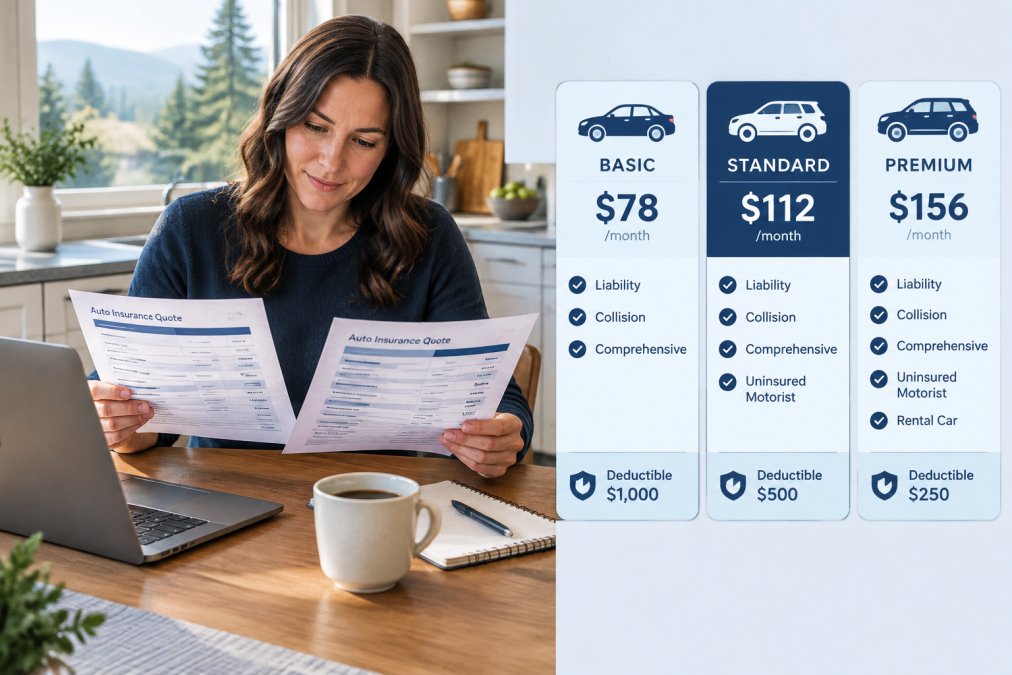
Work through these steps in order:
- Write down your current limits for liability, PIP, uninsured motorist, collision, and comprehensive.
- Decide your deductibles for collision and comprehensive before you shop, so every quote uses the same numbers.
- List your add-ons such as roadside, rental, and glass, and keep them consistent across quotes.
- Confirm discounts each carrier offers, including multi-policy, safe driver, and vehicle safety features.
- Ask about claims handling, not just price. Who answers the phone at 2 a.m. after a crash?
- Compare the total picture, including any change to your homeowners premium if you bundle.
- Review the exclusions on the cheapest quote before you commit.
That last step is where an independent agent earns their keep. We shop multiple top-rated carriers, show you the real differences side by side, and stay with you through the claim. You can compare auto insurance options with our team and see what your current policy may be missing.
Oregon's minimum requirements keep you legal, but they leave real gaps in a state with ice storms, wildfire smoke, and a steady share of uninsured drivers. The right policy is the one matched to how you actually drive, not the cheapest line on a quote sheet. Rise Insurance and Financial Services, LLC shops multiple top-rated carriers, provides plain-English guidance, and handles claims advocacy so you are not negotiating alone. Get a free quote with no obligation and see the difference a local independent agent makes.
Frequently Asked Questions
What are the minimum car insurance requirements in Oregon?
Oregon sets minimum auto insurance limits by statute, and these figures can change. Confirm the current requirements with the DMV or with us. Many drivers choose higher limits for better protection.
What does Personal Injury Protection cover in Oregon?
Personal Injury Protection Oregon explained: PIP pays for medical expenses, lost wages, and essential services for you and your passengers after an accident, regardless of who caused it. It can help cover things health insurance might not, like rehabilitation or household help while you recover.
Does Oregon car insurance cover theft or vandalism?
Only if you carry comprehensive coverage. Oregon does not require comprehensive coverage, but it pays for damage from theft, vandalism, fire, glass breakage, and animal collisions. If you have a loan or lease, your lender likely requires it. Otherwise, it is optional but often worth considering for newer vehicles.
Can someone drive my car if they are not on my insurance in Oregon?
In most cases, yes, as long as they have your permission and are not a regular household member you failed to list. Policies typically extend liability coverage to permissive drivers. However, if they live with you, your insurer may require them to be added to the policy. Always check with your carrier before lending your car long-term.
Does my Oregon car insurance cover me if I drive in another state?
Confirm with your insurer before a long trip to make sure your coverage meets the other state's requirements.
What is the difference between liability and full coverage in Oregon?
Liability coverage pays for damage you cause to others and is required by Oregon law. Full coverage is not a legal term but usually means liability plus comprehensive and collision coverage, which pay for damage to your own vehicle. Full coverage costs more but protects your car from theft, weather, and accidents regardless of fault.

Need help with your coverage?
Get a comparison from multiple carriers — with a local Oregon agent who picks up the phone.
Have a question about your coverage?
Get a comparison from multiple carriers — with a local Oregon agent who picks up the phone.